
The short answer: an ingrown hair is a hair that has grown back into the skin instead of out of it, and shaving, waxing and plucking are the usual causes. Most cases settle on their own if you leave them alone and don't squeeze them, and prevention starts with how you shave. For the longer term, the NHS lists long-term hair removal methods such as laser among the ways to prevent them.
What is an ingrown hair?
It happens when a hair grows back into the skin and leaves a small bump. According to the NHS, the bumps are raised and can itch, and sometimes you can see the hair trapped under the skin. Mayo Clinic adds that the bumps may be darker than the surrounding skin and can burn or sting.
Why do they appear?
- Shaving: it leaves the hair with a sharp tip that pierces the skin more easily as it grows, according to Mayo Clinic. Pulling the skin tight while shaving lets the cut hair draw back under the surface.
- Waxing, plucking and threading: the NHS links all of them to ingrown hairs.
- Hair type: people with coarse or curly hair get them more, because a curled hair tends to re-enter the skin.
- Area: the NHS lists the face and neck, legs, armpits, chest, back and pubic area, which is anywhere hair is removed.
How to deal with a bump
What helps
- Leave it to settle. The NHS says most cases don't need medical help.
- Use a gentle exfoliating scrub, which helps release trapped hairs according to the NHS.
- Shave the area less until it calms down. The NHS advises not shaving every day if you can avoid it.
What makes it worse
- Don't scratch, squeeze or dig at the bump with tweezers or a needle. The NHS warns this can damage the skin and cause infection.
- Don't shave over it with an old, blunt razor.
- Don't ignore bumps that keep returning in the same place. Mayo Clinic notes that repeated scratching can leave dark patches or scars.
A shaving routine that reduces ingrown hairs
These steps come from NHS and Mayo Clinic advice:
- Wet the skin with warm water and use shaving gel.
- Shave in the direction the hair grows, with as few strokes as possible.
- Rinse the razor after every stroke.
- Don't pull the skin tight while you shave.
- Don't use a blunt razor.
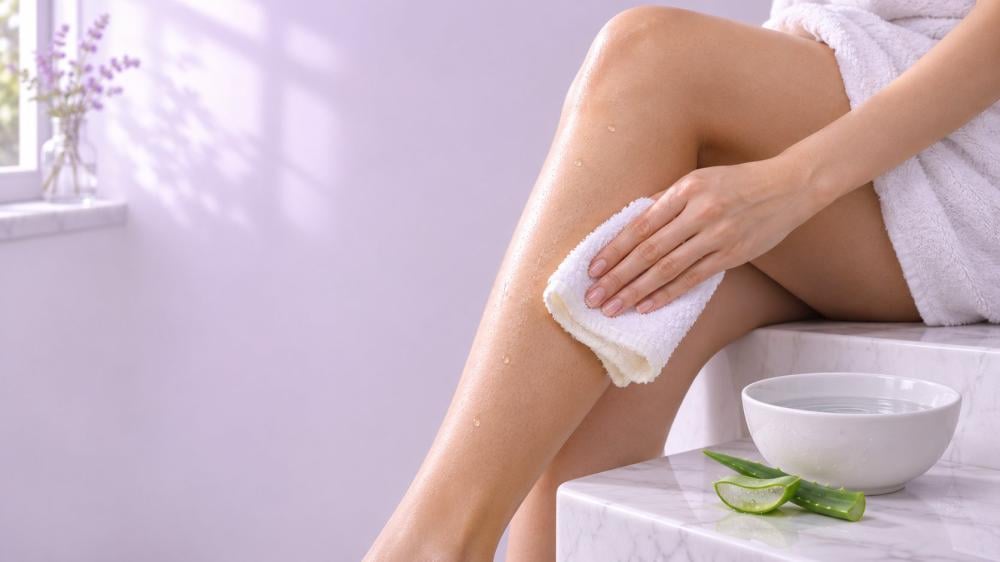
- After shaving, hold a cool, wet cloth on the skin.
We cover shaving in more detail in "Shaving before a laser session".
Where does home laser fit in?
The main cause is repeated shaving and plucking. That is why the NHS lists long-term hair removal methods, including laser, among the ways to prevent ingrown hairs. The logic is simple: the less hair that grows, the fewer hairs can get trapped, and the less often you need to shave.
The accurate way to describe laser results is hair reduction over regular sessions, not permanent removal after one use. We explain this in "Does home laser work?".
Three points from the RETSKIN manual
- Don't use the device on inflamed skin: the manual rules out areas with folliculitis, infection or wounds. Wait until the bumps have fully settled.
- You still shave before every session: so follow the shaving routine above, and avoid plucking and waxing throughout your sessions.
- Acid exfoliants: the manual lists AHA and BHA acids among the reasons not to use the device, so stick to a gentle, acid-free scrub while you are doing sessions.
Remember that the devices suit skin types 1 to 4 and natural brown or black hair. The details are in "Your skin and hair colour".
When to see a doctor
According to the NHS, see a GP if there are signs of infection:
- The ingrown hair or the area around it is very painful, hot or swollen.
- You have a high temperature, or feel shivery or very unwell.
A doctor may remove the hair with a sterile tool, or prescribe a steroid cream for swelling and irritation, or antibiotics if there is an infection.
FAQ
Do ingrown hairs go away on their own? In most cases, yes. The NHS says you usually don't need medical help unless there are signs of infection.
Should I pull the hair out with tweezers? No. The NHS warns against picking or squeezing the bump. If the hair needs removing, a doctor does it with a sterile tool.
Does home laser treat ingrown hairs? It doesn't treat an existing bump, and it isn't used on inflamed skin. Its role is long-term prevention: less hair means less shaving and fewer chances for hairs to get trapped.
Why do ingrown hairs leave dark marks? Mayo Clinic notes the bumps can leave patches darker than the surrounding skin, and scratching makes this more likely. The RETSKIN manual rules out using the device on dark spots, so don't pass the device over them.
Sources:
- NHS: Ingrown hairs
- Mayo Clinic: Ingrown hair
- User manual for the RetSkin IPL devices, models T023K and T055KQ: contraindications.