
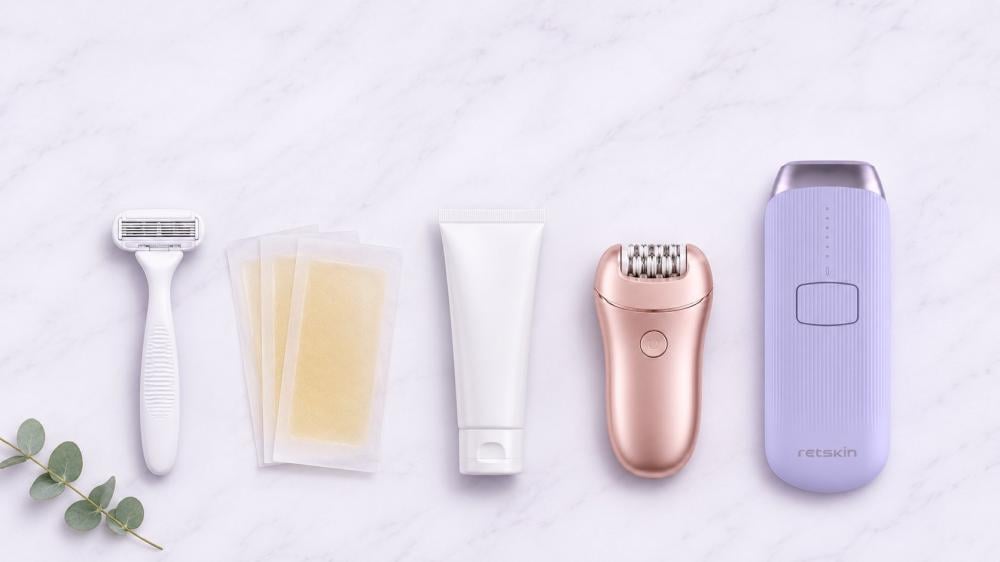
The short answer: no single method is best for everyone. Shaving is the fastest and cheapest, but you repeat it every few days. Waxing lasts longer, but it hurts. Laser, at home or in a clinic, is for anyone who wants to reduce the hair itself over the long term, provided their skin tone and hair colour suit it. The right choice starts with one question: what exactly do you want?
The comparison at a glance
Method | How it works | Main drawback
- Shaving: cuts the hair at the skin's surface | hair is back within days, and it can cause irritation and ingrown hairs
- Hair removal creams: dissolve the hair at the surface with chemicals | can irritate the skin
- Waxing and sugaring: pull the hair out from the root | pain, and a chance of ingrown hairs
- Plucking, threading and epilators: pull the hair out from the root | pain, and only practical for small areas
- Home laser (IPL): light that weakens the follicle over regular sessions | doesn't suit every skin tone and hair colour
- Clinic laser: a laser chosen and set by a specialist | cost and appointments
- Electrolysis: treats each follicle one by one | takes a long time
Temporary methods
Shaving
It cuts the hair at the skin's surface and doesn't touch the follicle. It is quick and painless, and you can do it at home any time. The drawback is that hair returns within days, and poor shaving is linked to ingrown hairs. The right way to shave is in "Shaving before a laser session".
Hair removal creams
They dissolve the hair at the surface with chemicals. They are easy and painless, but Mayo Clinic advises testing them on a small patch first, because the chemicals can irritate the skin.
Waxing and sugaring
They pull the hair out from the root, so skin stays smooth for longer than with shaving. In return there is pain every time, and the NHS links waxing to ingrown hairs. You also need to let the hair grow a little before each session.
Plucking, threading and epilators
The same idea: pulling the hair out from the root. They suit small areas, they hurt, and the NHS links them to ingrown hairs as well.
If ingrown hairs are your main problem, read "Ingrown hairs".
Long-term methods
Home laser (IPL)
Light is absorbed by the pigment in the hair and turns into heat that weakens the follicle. The result is hair reduction over regular sessions, at home and with no appointments. Its main condition is skin tone and hair colour: RETSKIN devices, for example, suit skin types 1 to 4 and natural brown or black hair, and are less effective on white, grey, blonde and red hair. The details are in "Does home laser work?".
Clinic laser
A specialist chooses the type of laser and its settings for your skin. Mayo Clinic says most people need 4 to 8 sessions, and that results usually last several months and sometimes years, with no guarantee that they are permanent. It is the better option for very dark skin. We compare the two in "Home laser or clinic sessions?".
Electrolysis
A specialist treats each follicle one by one. Cleveland Clinic states that it is the only method approved by the US Food and Drug Administration for permanent hair removal, and that it works with all skin tones and hair colours. Its drawback is time: repeated appointments, treatment that can last up to a year and a half, and longer still for large areas.
How do you choose?
- You want a fix now at the lowest cost: shaving.
- You want smoothness that lasts longer and don't mind the pain: waxing or sugaring.
- You are tired of repeating and want to reduce the hair itself: laser, once you have checked that your skin tone and hair colour suit it.
- You value privacy and have little time: home laser.
- Your skin is very dark: clinic laser with a type designed for dark skin.
- Your hair is white, grey or blonde: light doesn't respond well to it, and electrolysis works with all hair colours.
Can you combine methods?
During your laser sessions, stick to shaving. Plucking and waxing pull out the hair the light needs, and medical centres advise avoiding hair removal creams during this period.
Where does RETSKIN fit in?
If you choose home laser, we have two devices:
- Pro AI: reads your skin tone before each flash and selects the energy level automatically.
- X3: you choose the level yourself, with three consecutive flashes in each firing cycle.
Both come with a golden results guarantee of one year, under the terms published on the warranty page.
RETSKIN Mini razor for shaving before your session
FAQ
What is the fastest way to remove body hair? Shaving. It is also the shortest-lived, because it only cuts the hair at the surface.
Which method removes hair permanently? According to Cleveland Clinic, electrolysis is the only FDA-approved method for permanent hair removal. Laser is more accurately described as hair reduction, with results that last months for many people and sometimes years.
Does shaving make hair thicker? Shaving cuts the hair at the skin's surface and doesn't touch the follicle.
Can I wax between laser sessions? No. Waxing pulls the hair out from the root, so the light has nothing to target. Shave only.
Sources:
- Mayo Clinic: Laser hair removal
- Mayo Clinic: Ingrown hair
- NHS: Ingrown hairs
- Cleveland Clinic: Electrolysis
- User manual for the RetSkin IPL devices, models T023K and T055KQ: skin tone and hair colour chart.