
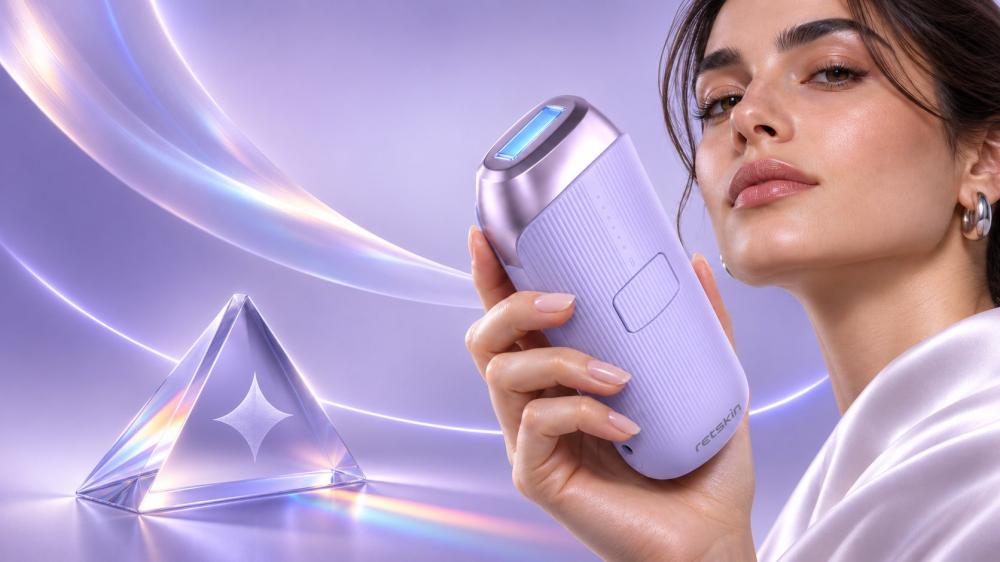
Most devices sold as a "home laser" do not use laser in the strict sense, but Intense Pulsed Light (IPL). The difference is in the type of light: a laser emits a single, focused wavelength, while IPL emits a broad spectrum of light. Both technologies aim at the same target: the melanin pigment in the hair.
Understanding this difference saves you a lot of confusion in front of adverts, and helps you know what to expect from a device at home.
How does light remove hair in the first place?
The idea is simple. The melanin pigment in the hair absorbs the light, which turns into heat that reaches the hair follicle and weakens it, so its growth slows down over time.
But the light only affects follicles that are in the active growth phase at the time of the session. Dormant follicles need later sessions once they become active. This is why one session is never enough, however powerful the device.
Laser: a single, focused wavelength
A laser emits light at a single wavelength, directed and coherent. Each type of clinic laser has its own suitable use: some suit dark hair on fair skin, and some are designed for dark skin. That is why choosing the device and its settings in a clinic depends on your skin type, and is handled by a specialist.
IPL: a broad spectrum of light
An IPL device emits broad-spectrum light, roughly between 400 and 1200 nanometres, passed through filters that block wavelengths harmful to the skin, such as ultraviolet. This technology is the most widely used in home hair removal devices, and it works best on dark, coarse hair.
The difference at a glance
- Type of light: Laser: a single wavelength. IPL: a broad spectrum with filters
- Where it is mostly used: Laser: clinics, under a specialist's supervision. IPL: clinics and home devices
- What it targets: Laser: the melanin pigment in the hair. IPL: the melanin pigment in the hair
- Works best on: Laser: dark hair, with a laser type that suits the skin. IPL: dark, coarse hair on fair to medium skin
- Is the result permanent?: Laser: significant hair reduction, with maintenance sessions. IPL: hair reduction, with maintenance sessions
Is the result permanent?
Not with either technology. The more accurate description is "hair reduction", not "permanent removal". Hair that grows back is usually finer and lighter, and most people need maintenance sessions from time to time to keep the result. Any advert that promises permanent removal from the first sessions deserves a second look.
What does this mean when choosing a home device?
Since most home devices use IPL, the key question is not "laser or IPL?" but: what are the details of this particular device? Look for:
- Energy stated clearly in numbers, not vague words like "very powerful".
- Cooling that accompanies the session.
- A way to choose the right energy for your skin: a clear suitability chart in the manual, or a sensor that reads skin tone.
- Eye protection during use.
- A clear warranty on the device and the lens.
Both RETSKIN devices use IPL technology with sapphire glass cooling. X3 fires three consecutive flashes with energy up to 27 joules for the three combined, with manual control over five levels. Pro AI reads skin tone before every flash to choose the energy automatically. Compare the two devices in the Laser Hair Removal section.
Frequently asked questions
Is IPL safe to use at home? A systematic review of studies on home devices found that temporary redness was the most common side effect, with less common effects such as swelling or changes in skin colour. Following the device manual and protecting your eyes reduce the risks.
Does it work on all hair colours? No. Blonde, white and grey hair contain little pigment, so they do not respond well. Red hair also responds poorly.
How many sessions do I need? The number varies with the device, the area, hair colour and consistency. Follow the session schedule in your device manual.
Sources: